Where Design Intelligence Lives: Inside MMID’s Sourcing Library.
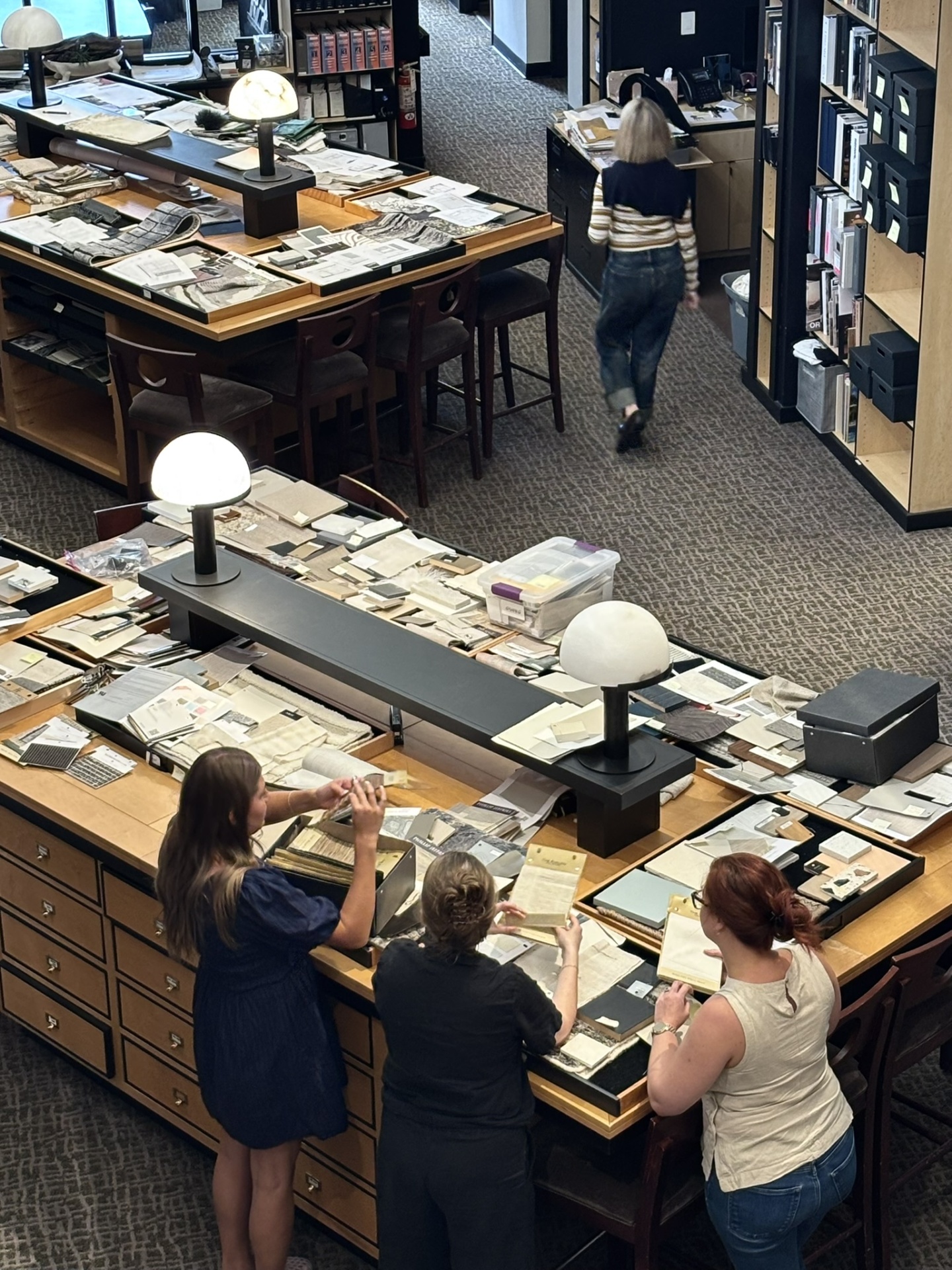
Walk into our sourcing library at our Winter Park, Florida, headquarters and the scale is immediately apparent: two stories, more than 16,000 square feet, and thousands of fabrics, finishes, furnishings, woods, stones and other materials. But the longer you spend here, the less the square footage seems like the point. What makes the space extraordinary is what happens among the people who use it.
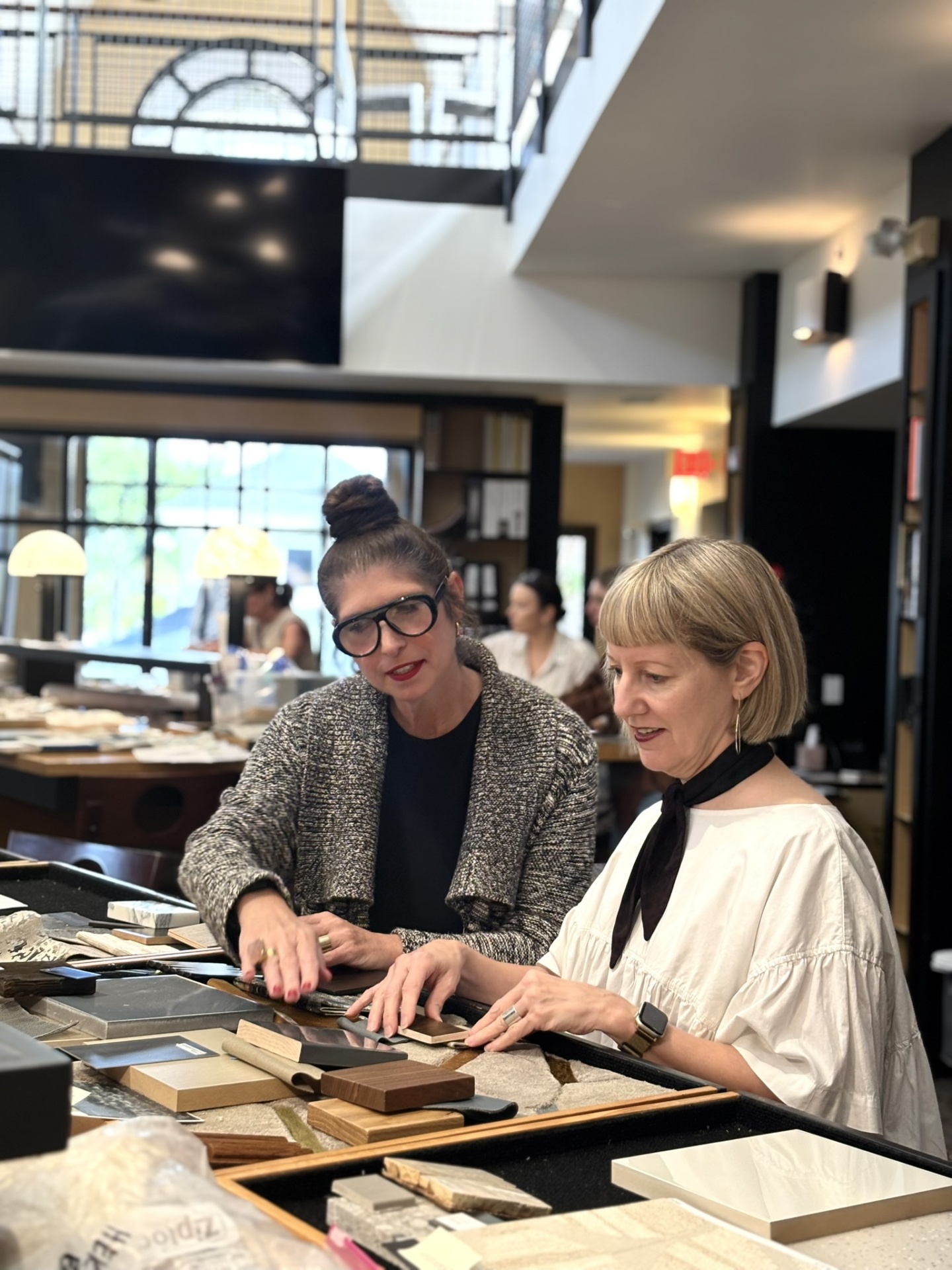
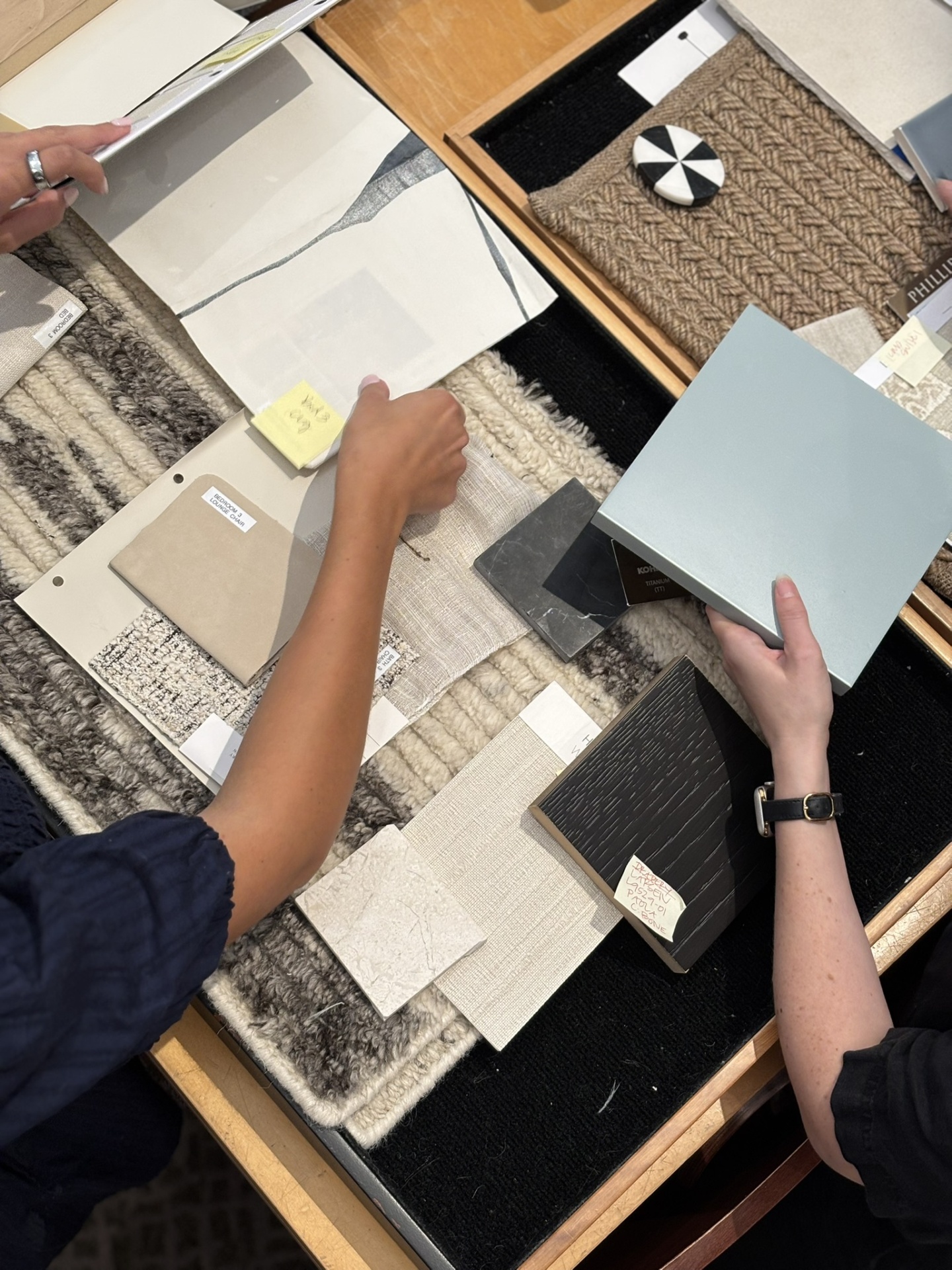
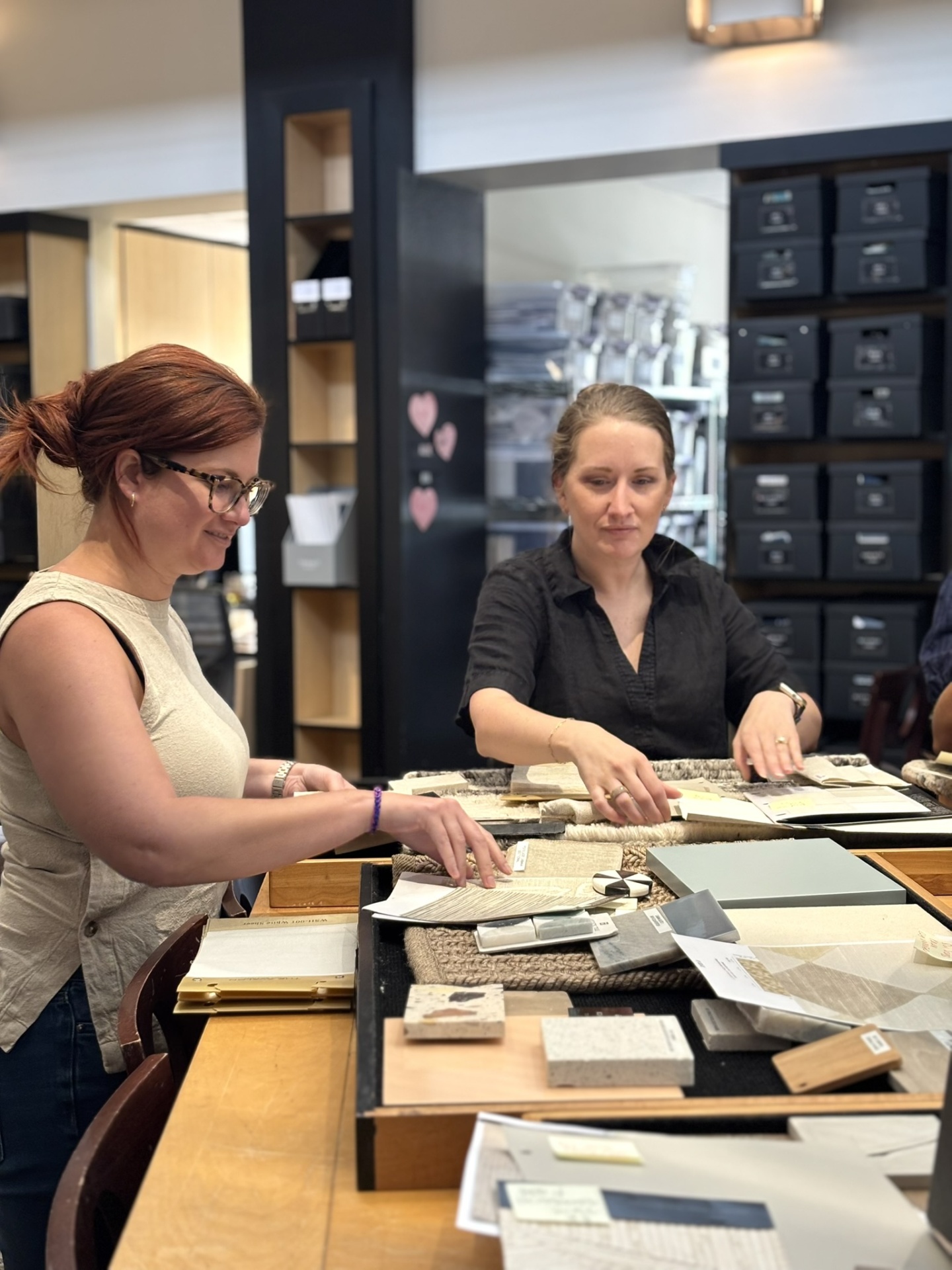
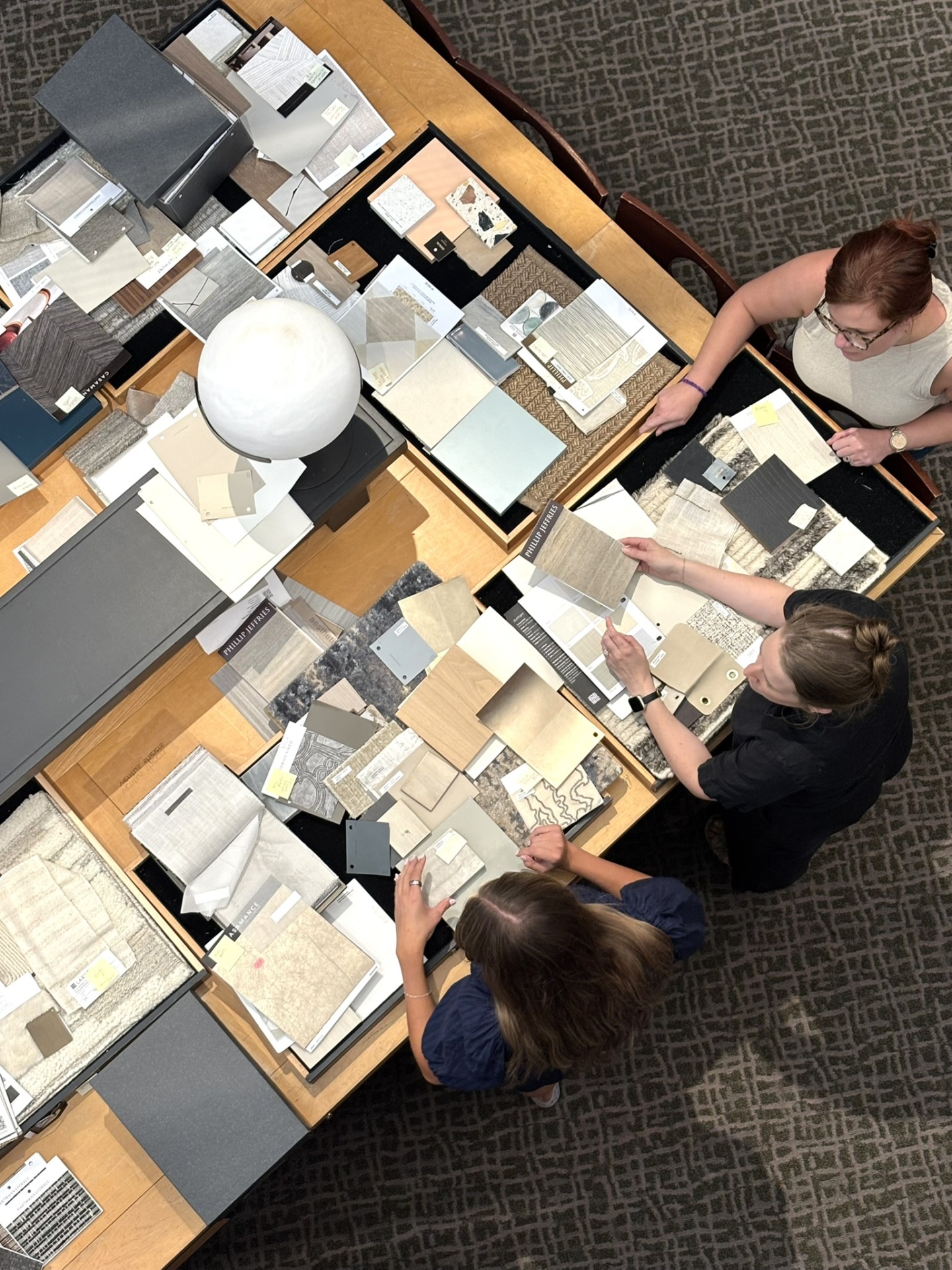
Our studios radiate from the library, so our designers move through it naturally throughout the day—pulling a fabric, comparing finishes, building a palette, returning to a desk and circling back when another idea strikes. Three long worktables anchor the center of the space, where project trays and presentation boards take shape as materials are gathered, edited and considered together.
The rhythm is familiar: a designer walks by on the way to grab coffee, catches a glimpse of another project tray and suddenly has an idea.
“Sometimes the most successful solutions happen when another designer walks by and is like, ‘Oh, I have the perfect thing for that,’” says Creative Director Melissa Adair. “It’s the collaboration and how we shape each other’s work. That energy is priceless.”
That exchange captures something fundamental about how we work at MMID. Our designers bring their own expertise to every project, but they also bring the collective experience of the studio with them. The sourcing library simply creates the environment for that knowledge to circulate.
The Collective Intelligence of the Studio
Great design rarely happens in a vacuum. A designer may come to the library looking for one particular finish and leave with an entirely different idea. A material encountered months earlier may suddenly become the answer to a challenge on a new project. A passing comment from another designer can shift a palette, solve a problem or open up a possibility no one had considered five minutes earlier.
The library makes those moments possible because the people are always close to the resources—and to one another.
There is energy here, but there is also a productive quiet. Designers gather around the worktables to build trays and presentation boards, talk through ideas and challenge one another. Then, when the conversation settles, they step back to edit and refine. The spontaneity and the discipline work together.
For our clients, that collective intelligence is an important part of the experience. They may come to MMID for the expertise of a particular designer, but they benefit from the knowledge and perspective of the entire team.
A Private Marketplace at Our Fingertips
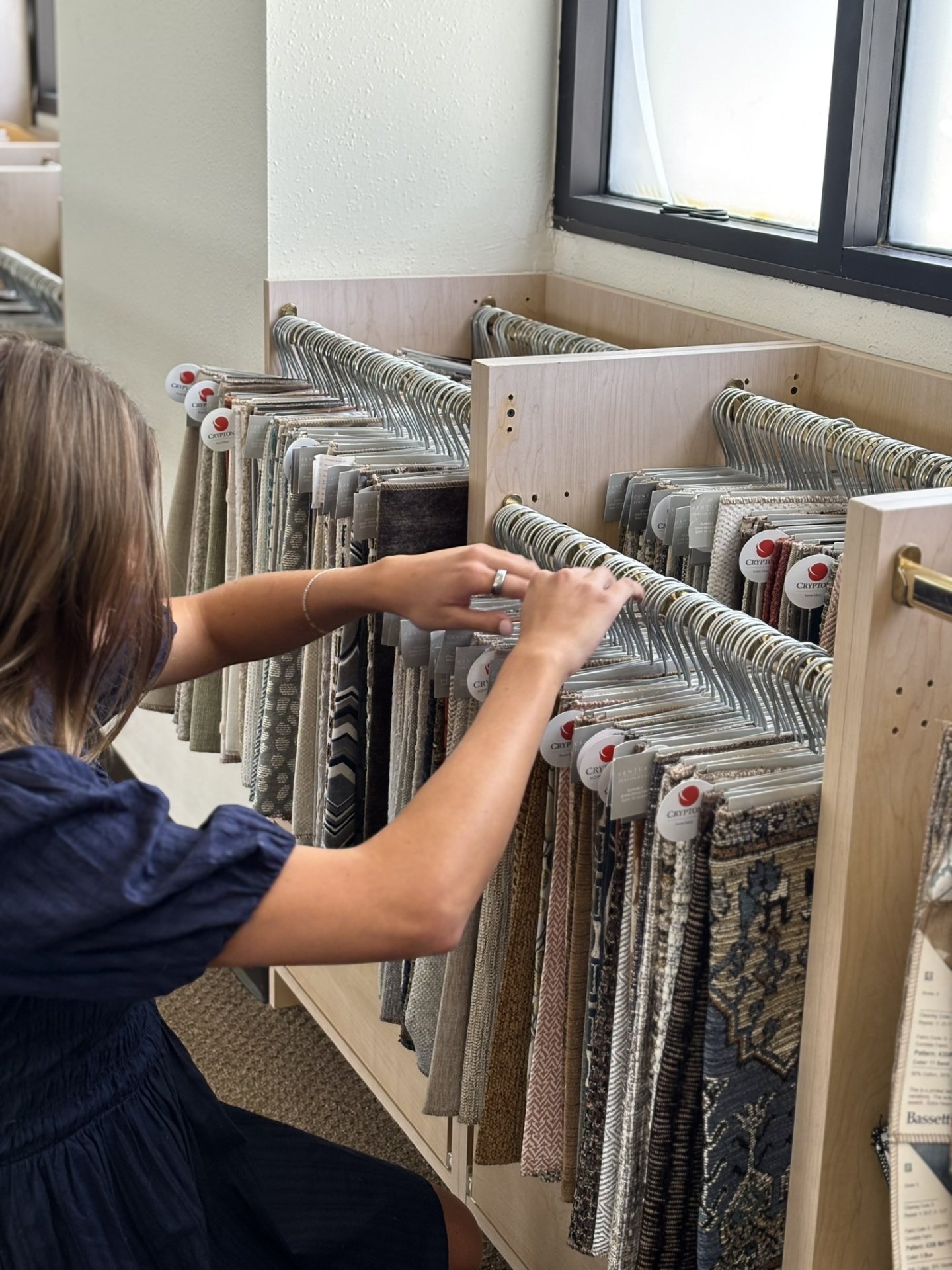
Of course, the physical resource itself is remarkable. We think of the library as a highly curated marketplace within our own walls, encompassing an extraordinary range of materials and products.
But having beautiful things nearby is only the beginning. Every material that earns a place here has been considered through the lens of our work. We want to understand how it performs, how it wears, what can be customized, what the lead time looks like and how the company behind it supports the product.
“It’s like our own private High Point Market,” says Vice President Kathryn Dunagan. “And everything’s vetted. We’ve worked with these vendors, some for decades, to ensure everything is of the highest quality. It can’t just be about beautiful things.”
That distinction matters. When a designer pulls a fabric or finish from the library, the selection isn’t random. There is experience behind it.
It also changes the pace of the creative process. Instead of trying to imagine how something will look based on a digital image, we can hold it, compare it and see it in context. If something isn’t quite right, we can reach for another possibility without leaving the building or waiting days for a sample to arrive.
“Because our library is so extensive and consistently being replenished with new products, you don’t lose creative momentum,” adds Melissa. “We have everything we need right here at our fingertips.”
That immediacy gives designers room to follow an idea while it’s still fresh. One material can lead to another; a palette can evolve; an unexpected direction can become the right direction.
A Library That Is Always Learning
The resource is never static. We host as many as four vendor presentations each week, welcoming manufacturers and makers who introduce our team to new collections, materials, finishes and capabilities. The constant flow of new information gives our designers an early look at what’s coming next, while keeping fresh ideas—and new possibilities—in constant circulation.
That ongoing exposure cultivates something we value enormously: curiosity without a deadline.
Turn your luxury design dreams into a reality
Sometimes a project begins with a very specific vision. Then a designer encounters a new material and everything changes.
“Sometimes a project starts with a very specific vision,” says Melissa. “But then you see a new fabric or material that can completely change your direction. And that’s what makes it exciting.”
We are continually building what might be called an internal catalog of ideas. A designer may see something today that doesn’t have a home yet, but it stays in the back of their mind until the right project comes along. Those discoveries keep us from reaching for the same familiar answers and leave room for the unexpected.
Our librarian helps keep that ecosystem moving, coordinating vendor presentations, managing incoming materials, updating samples and product information, and working closely with vendor partners to ensure the library remains current and useful.
In many ways, we have a design center within our own walls—but one curated specifically around our team, our work and the needs of our clients.
Forty Years Behind the Resources
The deepest layer of the library, however, cannot be seen on a shelf. It’s the knowledge accumulated over four decades of working with vendors, manufacturers and makers.
We know the people behind the products. We know who stands behind their work, who can customize, who is responsive and who will pick up the phone when a challenge arises. Those relationships have become part of our sourcing infrastructure.
“A sample library is where things are stored,” says Kathryn. “Sourcing infrastructure is the knowledge behind it—the experience and decision-making that determine what belongs in the library in the first place.”
That knowledge is also reciprocal. Our vendor partners come to us not simply to present what is new, but to ask what we are seeing, what we are using and where they could do better. We are candid with our feedback, and those conversations can influence everything from how products are sampled for our library to how new capabilities are developed.
After 40 years, that exchange has created a depth of knowledge that can’t be replicated by simply filling a room with samples.
“Making something pretty isn’t that difficult,” adds Kathryn. “Making something pretty that endures is a different realm of design entirely.”
That distinction gets to the heart of our approach. We are not simply looking for something beautiful. We are looking for the right material, the right maker, the right application—and bringing the experience to understand the difference.
Where It Becomes the Client’s Advantage
Ultimately, the value of all of this extends beyond our studio. The library allows us to move ideas forward, solve problems in real time and draw on the collective experience of our team. Our scale and buying power deepen that advantage, giving us the ability to advocate for our clients, explore custom capabilities and rely on long-standing vendor relationships when the inevitable complexities of production, shipping and receiving arise.
We also invite our clients into the library because there is something immensely valuable about seeing the process firsthand. They can watch project trays come together, compare materials and discover possibilities alongside our designers.
“Sometimes they find themselves looking at another designer’s work and asking, ‘What’s that?’” says Melissa. “And that’s exactly the kind of conversation we want to encourage.”
The sourcing library may occupy more than 16,000 square feet, but its true dimensions are much harder to measure. They exist in the experience of our designers, the knowledge shared across the studio, relationships cultivated over decades and the unexpected ideas that emerge when all of those things come together.
Kathryn captures the heart of it simply: “The library gives our collective intelligence a physical place to live. Our people are what bring it to life.”